
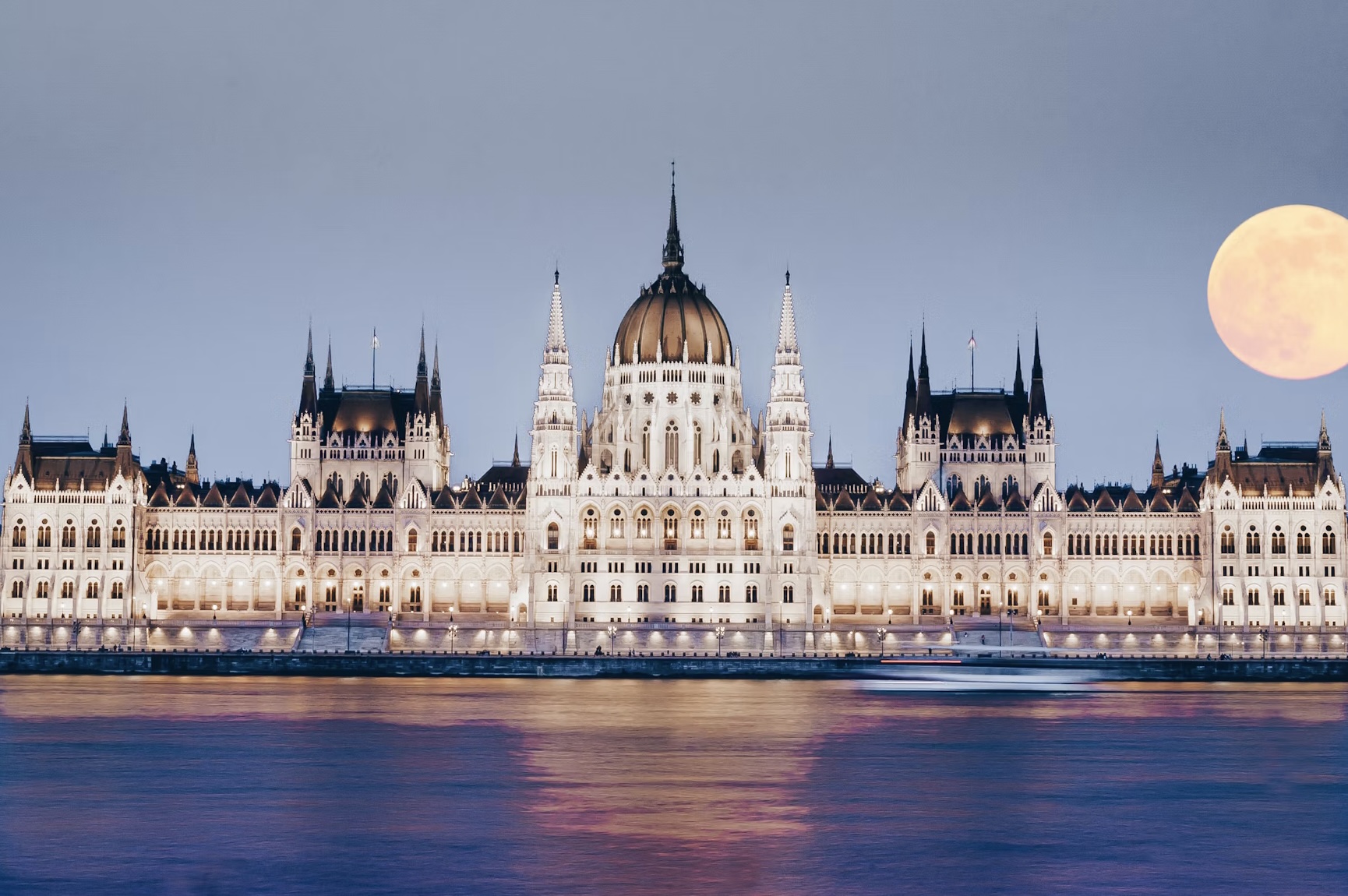
Budapest was the right place to ask the question. In April 2026, Péter Magyar’s Tisza party won a two-thirds majority and ended Fidesz’s 16-year hold on government. On 7 July, Hungarian public television suspended its news broadcasts pending an overhaul. Hungary is now living through the question our workshop set out to examine: what is public media for, and who keeps it honest?
On 17 September we hosted a policy lab on Private and Public Media as part of the Media Freedom Workshop in Budapest. The participants were practitioners and researchers with direct experience of the media in Poland, Slovakia, Serbia and beyond. The discussion will feed into a chapter of the forthcoming Free Media in Europe publication. These are the issues that stood out.
The legal floor is not a design
Europe now has a binding baseline. Article 5 of the European Media Freedom Act requires member states to give public service media adequate, stable and predictable funding. That funding must be allocated through transparent and objective procedures. The appointment of public media’s head of management or management board must follow open, transparent procedures and criteria set in advance; early dismissal is also restricted. Behind that sits the Amsterdam Protocol, which recognises each member state’s role in defining and organising its public service remit and funding it, subject to EU rules on competition and trading conditions.
That discretion is the crux. The law sets a floor, not a blueprint, and the space between the two is exactly where capture has historically got in.
Is public media still needed?
Participants were clear that it is, though not for the reasons often assumed. Public media exists to provide what the market will not. That means programming that is not commercially viable, made to serve everyone rather than a paying segment.

The harder problem is reach. One participant described how young people increasingly encounter news through social platforms such as Facebook and TikTok, while older audiences still turn to public broadcasters. A Polish participant made the same point about Generation Z: they do not read newspapers, and expressed concern about their exposure to propaganda on social platforms. If public media cannot reach the young, its role as a safeguard weakens just as the need for it grows.
Private media offers no automatic alternative. The fear, raised repeatedly, was that private outlets can simply be bought by oligarchs. Others noted that “free” content is rarely neutral. Free-to-view religious channels in the United States and free streaming offers elsewhere can be vehicles for influence in their own right. The Serbian perspective put quality first and called for proper vetting before public grants are awarded to media operators. Others cautioned that grants alone are not the answer.
No funding model is capture-proof
This was the session’s sharpest finding. Every model on the table has been turned into a weapon somewhere.
Slovakia abolished its licence fee from July 2023. It moved public media onto state funding, and a subsequent reduction in its planned funding showed how vulnerable that arrangement can be to political decisions. Yet a licence fee is no guarantee either. Participants cited disputes over the Czech licence fee as an example of how its level can become a political lever. Viewers in several countries also end up paying twice, once for a cable subscription and again for the state broadcaster.
The group then turned to governance. I drew on the UK’s experience of independent regulation, from Ofwat’s creation at water privatisation in 1989 to Ofcom today. My argument was that oversight bodies must be independent and cross-party if they are to uphold standards objectively. The Polish perspective was sobering, after the Law and Justice years, there is simply no prospect of cross-party agreement. The group also discussed Hungary’s nine-member body as one attempt at balance. It has three members each from government, the opposition and professional organisations.
Where agreement is impossible, there must be a backstop and an agreed way of resolving disputes. The trade world offers a cautionary parallel. The WTO’s dispute settlement system shows both why such mechanisms matter and how quickly they fail once a single party can block them.
A Serbian participant offered a genuinely different idea: why have only one public broadcaster? Germany funds several recognised churches rather than one. In the same way, several public broadcasters could make capture harder by removing a single point of failure. Underlying it all was a shared view of the media as a fourth estate, there to hold government to account rather than to serve it.
Should private media be limited?
Participants agreed that private media is not automatically a check on public media, and that both can be captured by vested interests. Some businesses and individuals buy media outlets to gain influence over politicians rather than to make money from journalism. That influence then helps them win valuable government contracts. Foreign money flowing into national media raised a further question: should it be capped or controlled?
In theory, EU competition law exists to prevent cartels and the abuse of dominant positions. But the group deliberately left one question open. Where is the line between protecting pluralism and government overreach into private media ownership?
What we took away
The test that emerged is simple to state and hard to meet: a safeguard counts only if it survives a change of government, in either direction. Measured against that, five points stood out:
- Stable, independent funding and transparent appointments, as EMFA Article 5 requires, are the core safeguards whatever the funding model.
- No model is immune. Licence fees, state budgets and general taxation can all be squeezed by a determined government.
- Young audiences rely on social platforms, which weakens the reach of both public and private media and raises concerns about exposure to propaganda.
- Independent, cross-party oversight and agreed backstops are needed so that institutions outlast the governments that create them.
- Ownership transparency and limits on concentration in private media remain unresolved, and deserve more attention than they get.
Hungary is now rebuilding its public media. Whether the new arrangements hold when power next changes hands will tell Europe more about media freedom than any regulation. Paddy Ashdown spent years helping the Balkans build institutions designed to outlast the people who ran them. It is a fitting test for this work too.
Our thanks to everyone who took part, and to our rapporteur, Merlene Toh-Emerson.
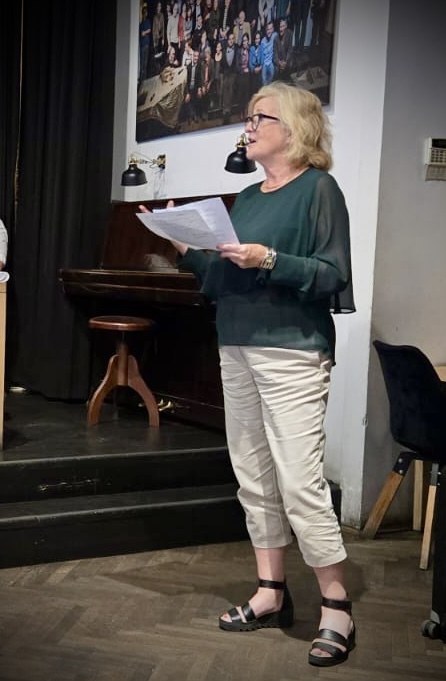
Lesley Batchelor CBE, running a workshop at the event.